Exceeding The Web Design Membranes To Design The Unimaginable
A website enacts several roles! It takes on its shoulders the responsibilities of - building a brand, adding credibility to it, inculcating awareness for products/services and driving sales. What else? It lays the road for reaching customers on a personal level. A little more? Okay, a website when accompanied by the perfect design, makes its respective business a legend in its domain.
On top of everything, a website has mere 0.05 seconds to impress the viewers. Yup, your gut feeling is true, these negligible seconds belong to, "WEBSITE DESIGNING."
Web Design USA looks over the finest details of designing and adhere to a tandem of creating one-of-a-kind websites for its clients. We not just design websites but craft web presence that’s delightful when surfed, busts technologies when explored and is secure when used. From small business web design to hardcore professional web design, we excel in every genre.
From brochures to flyers, logos, business cards, newsletters to complete websites and of course, everything that comes in between, our web designers are armed with tools to tackle them all.
Why Website Design Is A Necessity?
94% negative website feedback are a result of poor design
85% audience expects a website to appear as good on mobiles as it appears on desktop
38% viewers leave a website with an unappealing layout
75% consumers judge a company’s credibility according to its website design
An average of 5.94 seconds are spent by users on a website’s main page
About 46% customers rely on visual appeal and aesthetics to form opinion about the credibility of a business
OurServices
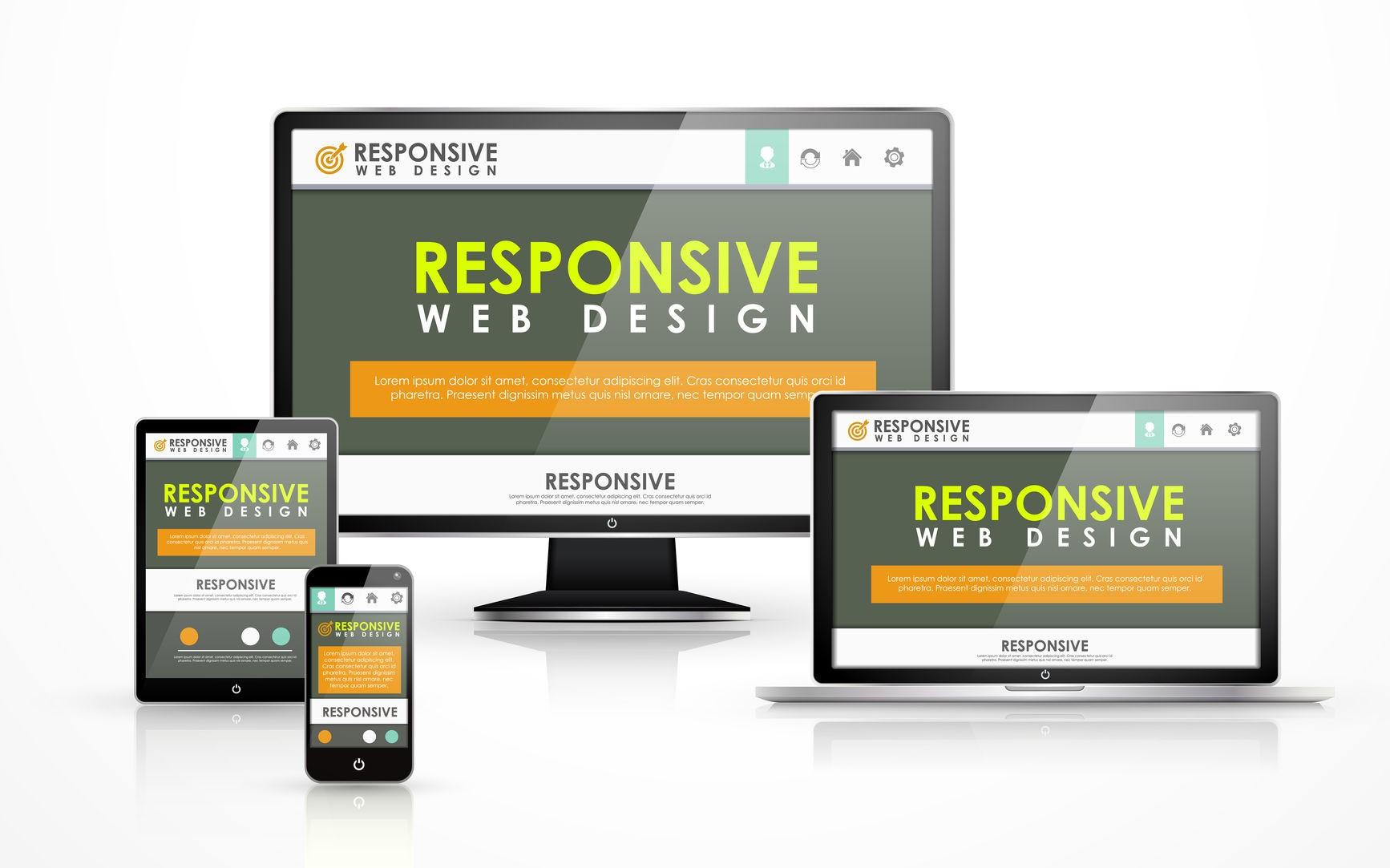
Responsive Web Design
We create websites that are functional, responsive and user-friendly. Being a famed web design company, we ensure the website looks good & impressive on every device.
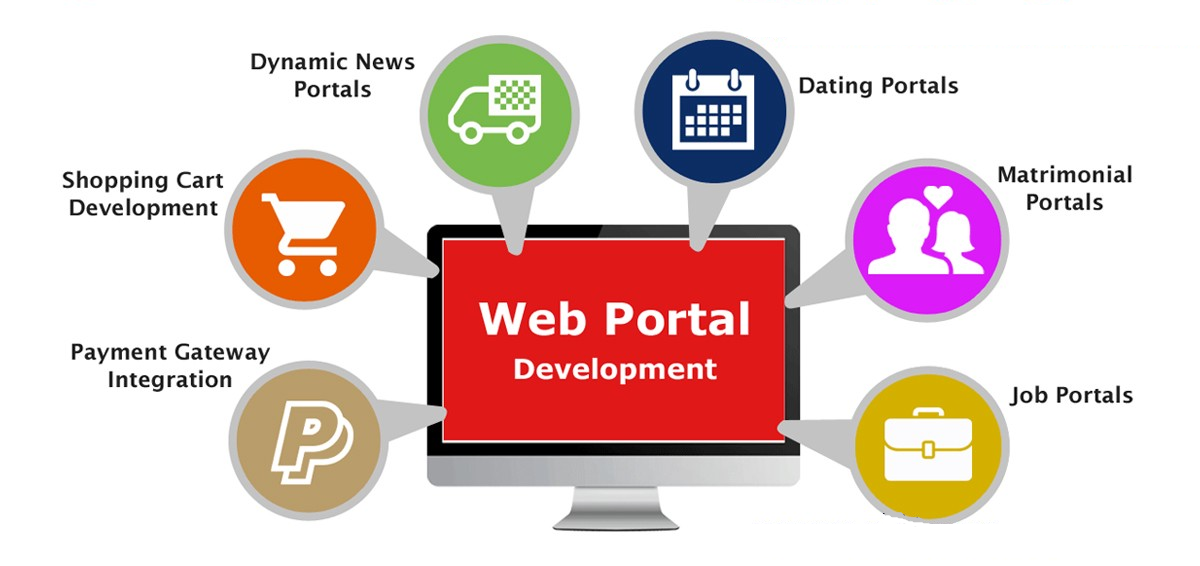
Web Portal Design
Our designers know how complex web portals are; thus, we build SSL/HTTPS secure, scalable, progressive and cross-browser compatible enterprise gateways.
Dynamic Website Design
We wait for dynamic designs, as they thrill us more than any adventure. Our professionals get an adrenaline rush when dynamic website design makes its way into their life.
Custom Web Design
Every captivating and magnificent catalog website sees the world when given birth by us. Responsive, SEO enriched and crisp web designing is our forte.
“Let Us Design Stunning & Easy-To-Digest Website For You”
However cliched it may sound, the first impression is indeed the last impression, well at least in the web world. All it takes is a click, and if the first impression (usually 5-7 sec, sometimes it’s as quick as the twentieth part of a second) is not immediately captured, a visitor is surely going to ‘bounce off. You end up losing a visitor cum prospective customer.
Have you ever wondered why a user decides to leave a website and open another one for the same exact information, product or service that you are providing? What do you think when you decide to stay on a website or read through an entire webpage? What are the reasons your small businesswebsite design isn’t just good enough?
A visitor disgruntled with your website goes away to never return. Don’t make it a struggle for the user to find things of value. Make it an easy ride and not a game of hide and seek. Let’s dive straight into 5 things that you can do to keep a visitor hooked, because that’s what you came here for:
1. The Introductory Impact: Everyone loves a good show, so put on one. Make the customer feel grandeur, luxury, exotic or whatever human emotion you are trying to invoke with your brand, but make it just the right amount of big and loud. An interactive animation, a short (under 2 minutes) video or a great visual component could introduce your brand, your work etc. Demonstration videos where users can see your product in operation also become intensely interested. Visitors instantly form a relationship with the product, brand or simply your concept of design. More than 60% of internet users feel visuals are more appealing and 22% prefer to watch videos more than text and images on the same webpage. Get professional to build your custom website design that speaks the language of your business
2. Now’s The Time To Sell:Bring out the big guns. Tell your visitor what’s your special deal and how you can be useful to them. Place it in the front and center in the least number of words. This will grab their attention and if your statement helps a visitor solve a problem, answer a question or make life easier then it is safe to say that you have a prospect in the pipeline. Give a clear overview of your business to establish yourself. This boosts confidence in the visitor that he made the right choice choosing you.
3. Give Them Room To Roam:Let your visitor ‘browse’ and quite literally roam around on the website. Allow them to explore but make the important details easy to find. Make it logical and the visitor will love you. Give them more room to see visuals, don’t cramp and force text just to fill space, emptiness allows eyes to rest and the brain to process information. Highlight important sections that you want them to notice, arrange all elements (text, space, visuals) in such a way that the vital things (services, reviews, about us) appear to pop-off the website. Give them material like how to do guides, video tutorials, blogs, case studies to connect with your brand and if not this time, they will eventually convert over to customers.
4. Guide Them Along But Be Subtle:Lead your visitors to your offering but be subtle about it. Coming off as a sleazy salesman would make them turn away as quickly they came. Be informative, give them an experience. Use color, size, visuals, typography, space and art to keep them tuned in as long as possible but pitch your products or services at some point just to increase the probability of success (conversion). Be coherent and organized all along, give them helpful information about your products, the issue and the solution that they can use. CTAs or Call To Action buttons are vital and they should be so strategically placed that they represent to customers. a continuation of the same amazing experience that brought them there.
5. The Human Connection Factor: Trust is the most common and the fundamental of every human emotion. If your customer has stayed on your website for more than 10 seconds, it means they’re down to business and they definitely like something on your website. Find out what it is by observing user behavior patterns. Collect data on what elements are used most on your website, which pages are viewed more and which buttons are most used. Give visitors something that they can use, an offer, an ebook, a newsletter, a free subscription trial, tutorials. Anything that they will remember you for.
Be objective with information, data and visuals. In the deeper ends of the website, give more engaging content like videos, blog, FAQ pages etc. to answer any query they have. Channel all this through social media handles to grow the number of hits. An updated, informative, decent looking website will do for almost all the necessities to keep your website busy. Track website statistics, study your visitors and up the visibility of those elements which are getting more attention. You can improve upon your website with better insights and behavioral patterns. It will tell you exactly what you want in your custom website design.
Commercial web design and development is a bit tricky in the sense that it oscillates between technology and consumer behavior. There is always something new in the market that starts trending and soon consumers want to consume it via the digital space. Web design services often face the challenge of keeping it simple yet making it eye catching. On top of that there is a technological gap between the consumers and clients which the web developers and designers are always trying to close.
Building beautiful and commercially viable websites takes creativity, imagination and most of all planning. In this post, we will go over some quick tricks that can fill the gaps in your web designing strategy. These tips cover everything from aesthetics to audience, color scheme to coding schema and from concept to content. Let’s dive right in:
1. Seeing Is Believing: Generally it is said that the first impression counts, but as website developers you have to do better than that. A good and elegant design not only attracts consumer’s attention but maintains it to keep them long enough on the website. Stick to simplistic designs, legible text and soothing objects on the website pages. Hire a web design service that understands this and implements it skillfully.
2. Communication Is Key: A good dialogue between the client and the developer ensures that client expectations are clearly understood and implemented in the design. Use of creative briefs is recommended to furnish this if the client is unsure about the designing strategy. Keep the client in the loop for every minor and major development on the project.
3.Time Is Money: On an average, a decent website should load itself completely within 8 seconds. Anything beyond that can lead to viewers abandoning your website. This is vital because users will not wait around, they will simply navigate away to save time. Use smart plugins and tools to make your website go faster. Compressing images, videos, logo and graphics is another great way to achieve this.
4. Use Smart Techniques: Creating a parallel CSS file for the website helps you apply changes using single line commands. Making individual changes can be time consuming and erroneous. A CSS script allows you to make changes to complete pages or websites with a single line of code.
5.The Layout Matters: Create the information flow of your website which is comfortable to access and engage. Use ‘call to action’ elements smartly where they can be easily noticed by the visitors. Give relevant information like the mission and goals of your company on the home page and make the visitor feel at home while using your website.
6. Audience Driven Content: When you think content, think audience. Include informative and engaging content that answer to questions, give solutions and helps users make decisions. Carefully list out your services and describe them in simple language. Making your content customer oriented will drive conversion rates remarkably. Provide ‘how to do’ guides, downloadable materials and free content that the audience can use.
7.Eye Pleasing Colors: Choose color schemes wisely as they can ruin or make your website. Keep a consistent background that allows text to be easily read. Invoke the right kind of sentiments in your audience’s mind with your color scheme.
8. Effortless Navigation: Websites slowly become more complex as products/services and pages are added to them. Keep the navigation simple and smooth. Any page on your website should not take more than 3 clicks to reach. A good navigation eases the customers and allows them to freely access and indulge with your business.
Web designing doesn't get complicated if it is approached with a set strategy incorporating the basics. Poorly designed websites become a liability instead of being an asset. Work up creative briefs that analyze the web designing and development from every angle. Ensure that the client is a participant in every phase of the pr...
Web is the new buzzing space for all kinds of activities. Marketing, advertising, commerce, communication, research and branding, all have shifted to the world wide web. Internet has become a playground for all these activities and much more. Websites and webpages are locations on this huge webspace that facilitate communication between several players at various levels. Thus, it is important to give web design and development their due attention since they play the crucial role of representing you online.
First of all, it is imperative to eliminate any confusion between website design and website development as these are two separate concepts aimed at a single target: to capture the consumer.
Web Design and Web Development:
The basic idea is web design, it dictates how a website should look like focusing mainly on visual aesthetics and design elements. A web design generally looks after the layout, flow of information and multiple elements which decide how a particular webpage/website will appear to the user/consumer. Elements like logo, color schemes, graphics, typography, etc. are all components of a web design plan.
Web development however works from behind the scenes, it is more technical in its approach and uses coding to exhibit design. A web developer works according to client’s specification, developing the front and back-end of a website. Languages like PHP, ASP.net, SQL, HTML are used to develop websites.
Combined, both these disciplines transform a website with a series of elements that enrich user experience. Interactive elements, buttons, graphics, illustrations, menus, scroll buttons and a host of other elements on the website are an integration of web design and web development. They together enhance the so-called ‘touch and feel’ of a website. Website design is actually a subset of the whole web development process and it usually paves the way for developers by giving them a rough idea and a basic design structure to proceed with the website building process.
Web Development Process:
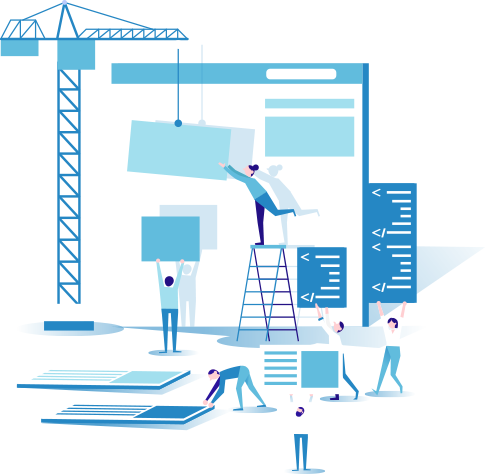
Process of developing a website involves a team of professional designers, developers, clients and managers. It follows a definite work-flow to ensure a smooth and efficient integrated development environment. After a client’s specifications are noted, the research team analyses and makes a report on which the design team formulates a layout design of the website. If this layout is approved by the client, developers come in and make the website. In case of disapproval, the team goes back to the drawing board and tries to understand the client’s requirements again. Post development testing and deployment is done by maintenance and modifications.
A web development company has a team of developers, designers and writers which fulfill their respective roles and work together to produce the desired results. This whole process is called website development. A website is actually never fully complete, there are always changes and modifications which are dynamic with respect to the technological and marketing requirements.
The latest trends in web design include a more interactive approach and eye-pleasing visuals that entice anyone who visits your website. Groundbreaking technologies like new programing frameworks which make coding easier and elements which completely transform the digital space are also making their way in web development processes. Today, anyone can build a website without writing a single line of code. Businesses are hiring people who can design and develop websites. Such mavericks are in high demand as they form a close loop that connects end to end of website development process, i.e. from inception to the culmination of website development.
...